I have started the Manaiakalani Innovators Teachers programme in 2026.
These slides are my Moonshot ideas, the very first step.
My learning and thinking. A record for me and a way to connect with others.
I have started the Manaiakalani Innovators Teachers programme in 2026.
These slides are my Moonshot ideas, the very first step.
As a hybrid cluster of schools across Aotearoa New Zealand, we decided that this was the year to curate our own online film festival. We have been part of the Manaiakalani Cluster for the last three years. We submitted films and attended the event planned by them to celebrate the creativity of learners across their cluster. We added our movies to their cluster site and learned alongside.
When we first started in 2022, films were heavily supported by facilitators as teachers mostly lacked experience. Over time, teachers gained skills and confidence. Four years later, we have teachers across a range of schools with growing skills in filmmaking.
We took as our theme for the film festival, our cluster whakatauki:
Poipoia te kākano kia puawai | Nurture the seed and it will blossom
The idea of nurturing the talents and creativity of teachers and learners seemed appropriate. The aim was to give people scope to be creative while also highlighting our purpose as a cluster.
As a part of the Manaiakalani Online Toolkits, I recently had the opportunity to lead a toolkit focused on creating short films by telling a story through images. It was a journey that completely changed my perspective on filmmaking.
Before this, my understanding of filmmaking was primarily technical—I knew about camera shots and storyboarding, but I honestly found it all a bit dry. It felt like a necessary but unexciting part of the process.
However, after diving into the research for this toolkit, I’ve had a massive shift in thinking. I now understand why these technical elements are so crucial, and I'm genuinely excited about them.
Practicing the habit of an inquiring mindset. "Why is this person talking/acting this way?" "What is underlying?" Knowing the background changes the way we act.
Empathy - having empathy towards ourselves. What is happening inside my brain? e.g. fear, judgement,... How am I feeling? I might need to clear my brain to be open to the other person. Put aside my own feelings. #itstartswithus
Cognitive Empathy - What does this person need right now?
Affective Empathy - How are they feeling?
The most important thing is that I genuinely want to hear what they have to say.
Interviewing as Qualitative Research
A Guide for Researchers in Education and the Social Sciences
Author: Irving Seidman
A strategy from this book
Public voice - for others' consumption
Private Voice - what is really going on
I can listen carefully for the private voice. I can be curious as to what is underneath.
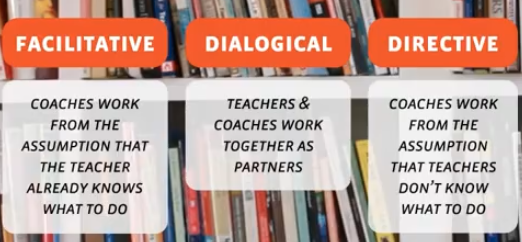
Facilitative Coaching - A sounding board. The teacher already knows what they need to do. Through the questioning process, the teacher recognises what to do and sets goals
Directive Coaching - An expert with an apprentice. The teacher does not know the practice. The coach needs to describe the practice and ensure that the teacher is doing the practice.
Dialogical Coaching - Don’t give advice as an expert, but position the teacher as a partner. Honour the autonomy of the teacher. The coach does not push their own perspective, but is not silent either.
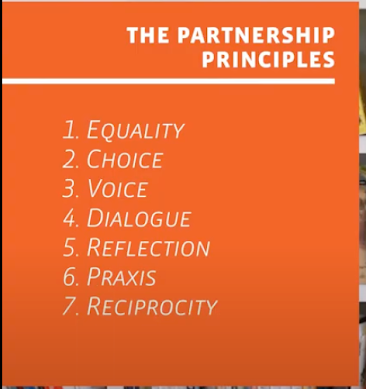
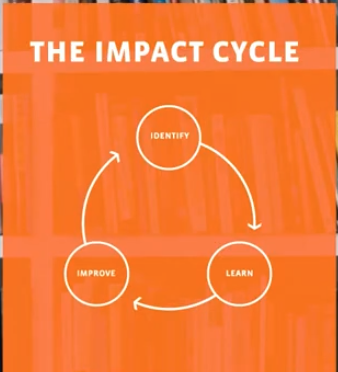
Identify a clear picture of the current reality, using evidence from the learner. The teacher, as the learner, indicates how close the reality was to the plan on a scale of 1- 10. The teacher then sets a PEERS goal: Powerful, Easy to achieve, Emotionally compelling, Reachable, Student-focused.
Model it as the coach. See it before we do it
Implement - Teacher does it
Modify (modify goal, strategy, etc)
https://www.instructionalcoaching.com/research/
https://www.amazon.com/Focus-Teaching-Using-High-Impact-Instruction/dp/1483344126
I have been working with teachers to support them in creating films for the Manaiakalani Film Festival.
Many have worked independently and have only needed a few prompts to get over the line.
I created this resource based on the work of Naomi Toland and using resources from the Manaiakalani teacher resources.
“...can you tell your story through images?.... so wherever possible 'show' rather than 'tell' and think about images carrying as much of the story, if not more, than dialogue.”
Teachers are keen to share their learning.
As part of our Professional Learning Group on Oneline Facilitation, we presented to our fellow facilitators about what we do.
Our aim was to inform about what we do, our inquiry and to hear back from others about what we might do differently.